
BIO
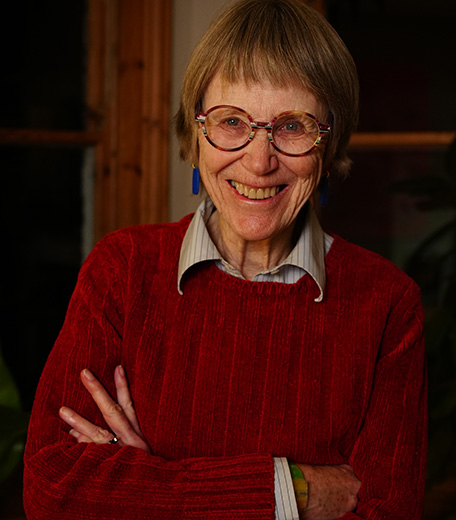
Nancy Lynn Cartwright (New Castle, Pennsylvania, United States, 1944) received her BSc in Mathematics from the University of Pittsburgh, then went on to earn a PhD in Philosophy from the University of Illinois with a dissertation titled “A Philosophical Analysis of the Concept of Mixture in Quantum Mechanics.” Her academic career took her successively to the universities of Maryland and Stanford and the London School of Economics, where she was a founder and later head of the Centre for Philosophy of Natural and Social Sciences. Currently Professor of Philosophy at Durham University (United Kingdom) and a Distinguished Professor in the Department of Philosophy at the University of California San Diego (United States), in 2025-2026 she is combining her duties there with those of Centenary Visiting Professor of Philosophy, Politics, and Economics at the University of Oxford. Cartwright is also Co-Director of the Centre for Humanities Engaging Science and Society (CHESS) at Durham, Honorary Distinguished Professor at National Tsing Hua University (Taiwan), and a Research Associate at the Institute for the Future of Knowledge at the University of Johannesburg (South Africa), where she is also a Senior Research Associate in the Department of Philosophy. She has authored or edited over 17 books (the latest, Causal Processes and their Warrant, due out this coming May 14), and more than 200 articles and book chapters, and has served on the editorial boards of twenty-five leading academic journals, including Philosophy of Science, Journal of Evaluation in Clinical Practice and Journal of Economic Methodology.
CONTRIBUTION
In her writings, the philosopher brings a perspective to what science is and how it can be applied that moves beyond certain influential notions – like the idea that science is merely a combination of theory and experiment, that all scientific knowledge can be reduced to physics, and that both science and the natural and social worlds obey deterministic patterns.
She has analyzed research theories and methods across multiple domains of both the natural and social sciences with attention to all the findings and products of science, not just its theoretical models and experiments. For, she argues, it is only the diverse, multifaceted array of methodological tools and scientific constructs that can guide us to a gradual albeit piecemeal understanding of the world’s complexity.
The committee noted also that her philosophical framework extends to an analysis of the methodological tools and models of the social sciences, in order to substantiate “evidence-based public policy decisions.”
One of her nominators, Luis Valdés, Professor of Philosophy at the University of Oviedo, explains that Prof. Cartwright “has advanced our understanding of how science achieves the successes that it does. In opposition to abstract philosophical theories of science, she has contributed decisively to defining such key questions in the practice of science as causality, objectivity and evidence.”
