
BIO
CONTRIBUTION
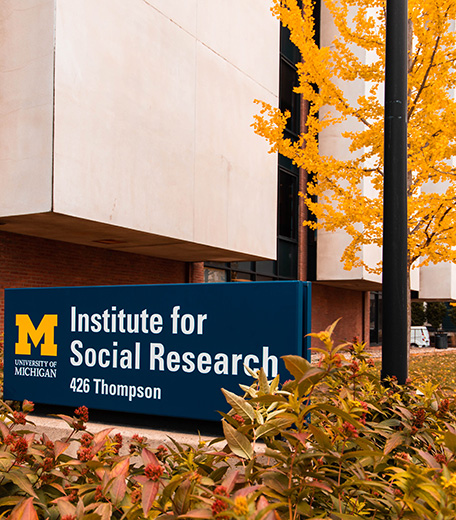
The Institute for Social Research (ISR) at the University of Michigan stands as a global leader in empirically grounded social science,” said the committee in its citation. “Since its founding in 1949, ISR has transformed how researchers and policymakers understand human behavior, social change, and population dynamics. Based on methodological innovation and public relevance, ISR is home to landmark studies that have shaped public policy […]. “As the steward of one of the largest social science data archives, ISR exemplifies the highest standards of social science in service of society.”
For eight decades now, ISR’s work has been anchored on the three core principles of methodological depth, longitudinal depth and public impact. These guiding tenets have led to the development of groundbreaking studies that have advanced the social sciences, while at the same time informing evidence-based public policy decisions.
The organization traces its origins to the 1946 founding of the Social Research Center or SRC, brainchild of the social psychologist Rensis Likert and a group of fellow scholars whose aim was to enshrine public opinion research as a scientific discipline within the academic community.
The Second World War period saw a growing interest in scientific methods applied to social research that would end up playing a decisive role in the birth of the IRS. Likert’s wartime experience in the U.S. Department of Agriculture’s Division of Program Surveys had shown the potential of using probabilistic sampling and standardized interviews to measure attitudes and behaviors on a large scale, and would serve as a template for the institutional model later implemented at the University of Michigan. In 1949, the SRC merged with the Research Center for Group Dynamics, founded at MIT by the social psychologist Kurt Lewin, to form the Institute for Social Research.
In its early years, the ISR helped refine the accuracy of measuring attitudes or predispositions (favorable or unfavorable) toward social groups, institutions, behaviors, and public policies through the development and dissemination of the so-called Likert scale (named after its creator, the center’s founder and first director), which enabled researchers to capture the intensity and structure of feelings.
As of the 1948 presidential elections, it began analyzing voters’ preferences through the Michigan Election Studies, alone in predicting the right outcome on the strength of its groundbreaking methodology (while most polls gave candidate Thomas Dewey a landslide victory, the ISR called it for the eventual winner, Harry Truman). This early success made the ISR sampling model a benchmark for political surveys in the United States.
Towards a better understanding of electoral processes and democratic engagement
The Michigan Election Studies were the precursor to the American National Election Studies (ANES) launched by the ISR in 1977. Through its Center for Political Studies (CPR), the ISR conducts national surveys and provides data on electoral behavior, public opinion, and political participation. This rich dataset has been fundamental in advancing the scientific understanding of electoral processes and democratic participation worldwide.
Another of the ISR’s signature projects is the World Values Survey (WVS), a global research initiative launched in 1981, which examines public values and beliefs in more than 120 countries, how they vary over time and the extent of their social and political impact. The WVS has proved an invaluable resource for tracking cultural change around the world and how it intersects with economic development and political life.
International demographic research is the focus area for the ISR’s Population Studies Center (PSC), covering topics like fertility, mortality, migration, and health disparities. Its work in this field has provided input for policies on family planning, public health, and aging, contributing to a deeper understanding of population dynamics.
The ISR is also behind pioneering longitudinal studies exploring the historical evolution of issues of major relevance to the U.S. population. One such is the Panel Study of Income Dynamics (PSID), which since 1968 has tracked the economic, social, and health factors that influence the lives of American families over time. Data from the PSID have been instrumental in shaping public policies addressing poverty, income inequality, and social mobility, providing an empirical foundation for legislative actions and social programs worldwide.
Since 1992, the ISR’s Health and Retirement Study (HRS) has been surveying a representative sample of Americans over the age of 50, collecting comprehensive data on income, work, assets, pension plans, health insurance, disability, physical health and functioning, cognitive functioning, and healthcare expenditures. The HRS has become a touchstone for policymakers and researchers, informing decisions on social security, healthcare, and retirement planning. Its methodology has been adopted by more than 40 countries, underscoring the ISR’s global leadership in aging research.
In the Inter-University Consortium for Political and Social Research (ICPSR), the ISR runs one of the world’s largest digital archives of social science data, hosting more than 250,000 datasets on topics such as education, aging, criminal justice, substance abuse and terrorism, making it a prized resource for researchers around the world.
