
BIO
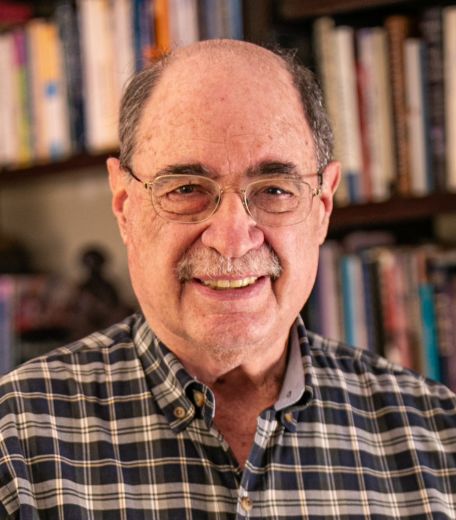
Charles F. Manski (Boston, Massachusetts, United States, 1948) received his bachelor’s degree (1970) and PhD (1973), both in economics, from the Massachusetts Institute of Technology. He spent the first twenty-five years of his academic career at Carnegie Mellon University (1973-1980), The Hebrew University of Jerusalem (1979-1983) and, on his return to the United States, the University of Wisconsin-Madison (1983-1998), where he held a series of professorships in the Department of Economics, as well as leading its Institute for Research on Poverty. Since 1997, he has been Board of Trustees Professor in Economics at Northwestern University (Evanston, Illinois), where he also chaired the Department of Economics from 2007 to 2010. Manski is the author of numerous research papers and nine books, including Discourse on Social Planning under Uncertainty and Identification for Prediction and Decision. He has served as Chair of the Board of Overseers of the Panel Study of Income Dynamics (1994-1998) and as Chair of the National Research Council Committee on Data and Research for Policy on Illegal Drugs (1998-2001). His editorial service includes terms as editor of the Journal of Human Resources, co-editor of the Econometric Society Monograph Series, and a member of the Editorial Board of the Annual Review of Economics.
CONTRIBUTION
Manski has pioneered the development of econometric methods to study precisely these situations of “hard uncertainty,” with this uncertainty factored into the analysis: “These are difficult public policy problems, and what you really need to do is to quantify the uncertainty. What that implies is that instead of providing a point estimate of some quantity, like what the tax revenue will be under certain income tax policies, I might give a bound, an interval, to say it will be between this and that level. And the width of that bound is going to express how much uncertainty there is. The bound may be very narrow, meaning we know a lot, or very wide, meaning we know relatively little.”
His work over the course of five decades “has profoundly influenced empirical research across education, health policy, labor markets, industrial policy, and social programs, by encouraging economists to rely on credible, transparent inference,” regarding the assumptions on which they base their research. “The methods he developed assess the degree of confidence we can have in empirical measurement,” the citation continues, enshrining him as “a critical conscience of measurement in the social sciences.”
